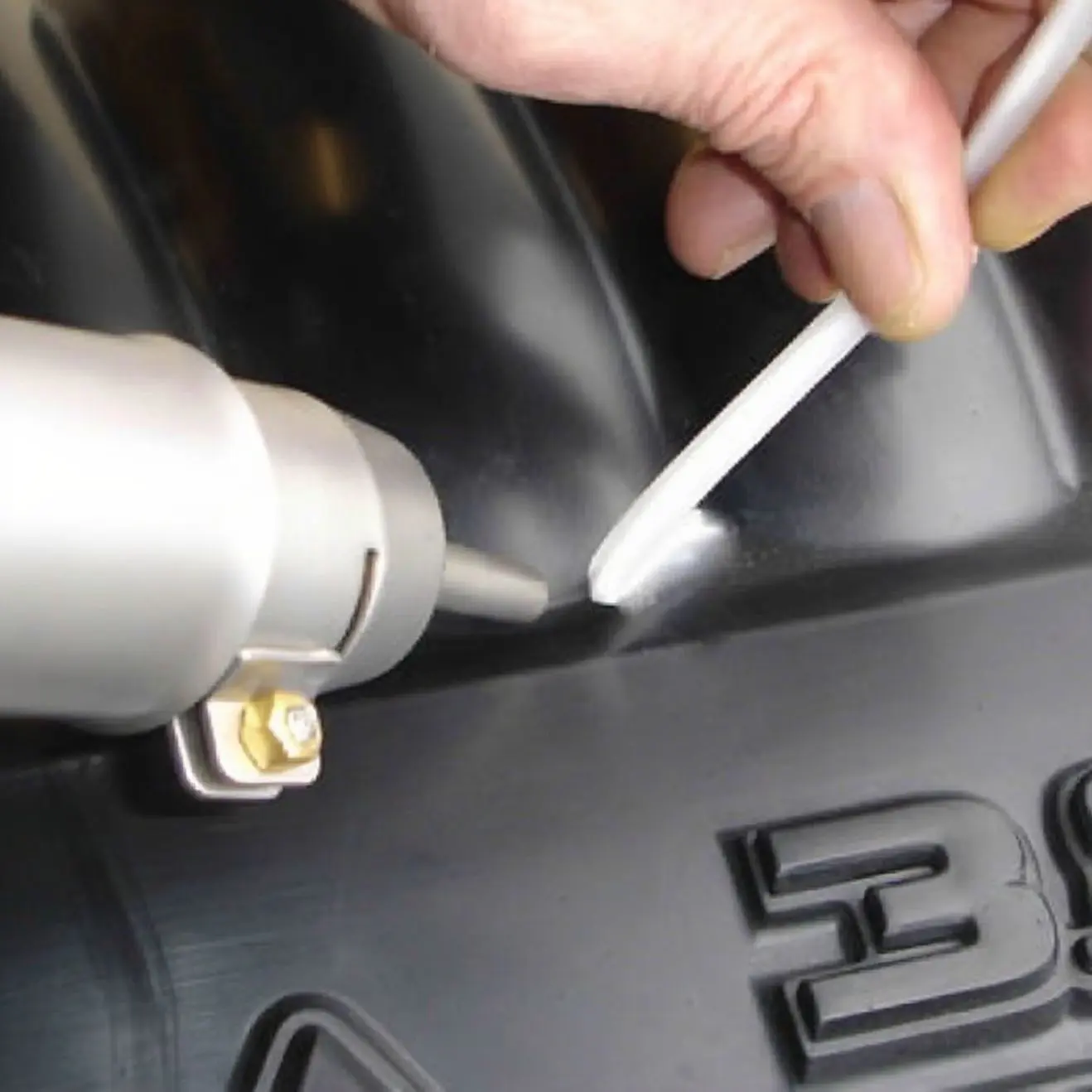
Automotive kits are configured for plastic bumper repair, splash-guard repair and vehicle interior plastics — the most common kit we supply. Modern bumpers are usually PEMD, so each kit includes a hot-air welder, PEMD (and commonly PP) welding rods, the correct welding shoes, and the rollers and brushes needed to prep and finish an automotive repair.For panel-beaters and repairers, an automotive kit turns a cracked or torn bumper into a structural repair at a fraction of replacement cost. Everything is matched and calibrated to work together, so you get a reliable weld without sourcing parts separately. Unsure which plastics your job involves? Our plastics identification guide and buying guide will point you to the right kit.
About Automotive Kits
Automotive kits are configured for plastic bumper repair, splash-guard repair and vehicle interior plastics — the most common kit we supply. Modern bumpers are usually PEMD, so each kit includes a hot-air welder, PEMD (and commonly PP) welding rods, the correct welding shoes, and the rollers and brushes needed to prep and finish an automotive repair.For panel-beaters and repairers, an automotive kit turns a cracked or torn bumper into a structural repair at a fraction of replacement cost. Everything is matched and calibrated to work together, so you get a reliable weld without sourcing parts separately. Unsure which plastics your job involves? Our plastics identification guide and buying guide will point you to the right kit.
Built for automotive plastic repair
Automotive kits are configured for one job: repairing cracked, split or broken plastic bumpers, splash guards, wheel arch liners and interior trim. Everything in the kit is matched to the materials and surface geometry of automotive plastics.
Body shops & smash repairers
Cost-effective alternative to bumper replacement. Repair cracked bumpers in 1-3 hours including paint prep, no waiting for parts.
Mechanics & service shops
Splash guards, wheel arch liners, undertrays, plastic engine covers — common damage from kerbs, potholes and minor impacts. Quick on-site repair.
Motorsport & restoration
Track-incident bumper repair, racing splitter fabrication, vintage car interior trim restoration. PEMD welds hold up to track temperatures and stress.
Why a dedicated automotive kit beats a generic kit
| Spec | Automotive kit | General fabrication kit |
|---|
| Welding rod stock | PEMD (the plastic most modern bumpers are made of) | Mixed: PP, PE-HD, PVC, ABS — usually no PEMD |
| Speed nozzle | Optimised for 3mm PEMD round rod and curved surfaces | Generic round-rod nozzle for various sizes |
| Pressure roller | Silicone, sized for bumper-radius work | Larger general-purpose roller |
| Temperature setting guide | Calibrated for PEMD (~280-300°C) | Multi-plastic — operator adjusts each time |
| Best for | Daily bumper repair, splash guards, interior trim | Mixed workshop jobs, varied plastic types |
What the automotive kit will repair
- Cracked or split front and rear bumpers (PEMD, sometimes PP)
- Broken bumper mounting tabs and clips
- Damaged plastic splash guards and wheel arch liners
- Cracked plastic undertrays and engine covers
- Snapped plastic mirror housings and trim panels
- Vehicle interior trim cracks and breaks (PP, PP/EPDM, ABS)
- Motorbike fairings and plastic body panels (typically ABS)
- Boat hulls and parts in PE (with the right rod swap)
Quick prep tip
A bumper repair is only as good as the joint preparation. V-groove the crack with a rotary tool, clean both sides of the joint with a brass brush, and degrease with isopropyl alcohol. Then weld with PEMD rod at the right temperature. Skipping the prep is the #1 cause of repairs that fail months later.
Frequently asked questions
Which plastic are car bumpers made from?
The vast majority of modern car bumpers are PEMD (polyethylene medium density), with recycling code 4. A small number of older bumpers and some commercial vehicle bumpers are PP (polypropylene, code 5) or ABS (code 7). Check the moulded recycling stamp on the inside of the bumper before welding. Our plastics identification guide walks through the burn and float tests if the stamp is unreadable.
Will an automotive kit weld a bumper back to OEM strength?
Yes, when done correctly. A well-executed PEMD-on-PEMD weld with proper preparation and the right temperature can reach 80-100% of the parent plastic strength. The technique matters: clean the joint, V-groove the crack, weld both sides where possible, control the temperature, and don't rush the speed. See our bumper repair walkthrough for the full process and our guide on how strong plastic welds actually are.
Can the automotive kit also weld interior plastics and splash guards?
Yes. The same welder works for any thermoplastic — you just change the rod to match the plastic. Most automotive interior trim is PP, PP/EPDM or ABS. The kit includes PEMD rod as standard; adding the appropriate rod for the interior plastic lets the same kit handle interior repairs too.
How long does a typical bumper repair take?
For a clean crack of 100-200mm: about 15-25 minutes of actual welding, plus prep and cooling time. Total job time including paint prep is 1-3 hours depending on damage extent. Severe damage requiring reinforcement on the back side takes longer but is still much faster (and cheaper) than bumper replacement.
Do auto-body shops use plastic welding instead of replacement?
Increasingly yes. Plastic welding repair is faster than replacement (no waiting for parts), cheaper (no $300-$800 bumper purchase), and more sustainable (no scrapped bumper to landfill). Most insurance assessors in NZ accept plastic-welded repairs for cracks under 300mm. See our motorsport bumper repair case study for an extreme example.
What temperature should I run the welder at for PEMD bumpers?
Start at around 280-300°C. PEMD welds at a lower temperature than HDPE because the polymer is softer. Too hot will scorch and degrade the plastic, weakening the weld. Too cold and the rod won't fuse to the substrate. Adjust based on how the rod flows during a test weld on an offcut.
Need help choosing the right automotive kit?
Tell us about the job: the plastic you're working with, the wall thickness, and how often you'll use the tool. We'll recommend the right combination for the application.
Get a recommendation Call us
About Automotive Kits
Automotive kits are configured for plastic bumper repair, splash-guard repair and vehicle interior plastics — the most common kit we supply. Modern bumpers are usually PEMD, so each kit includes a hot-air welder, PEMD (and commonly PP) welding rods, the correct welding shoes, and the rollers and brushes needed to prep and finish an automotive repair.For panel-beaters and repairers, an automotive kit turns a cracked or torn bumper into a structural repair at a fraction of replacement cost. Everything is matched and calibrated to work together, so you get a reliable weld without sourcing parts separately. Unsure which plastics your job involves? Our plastics identification guide and buying guide will point you to the right kit.